Source: China National Radio (CNR) · Published August 12, 2025 · Reporter Zhao Jiahui
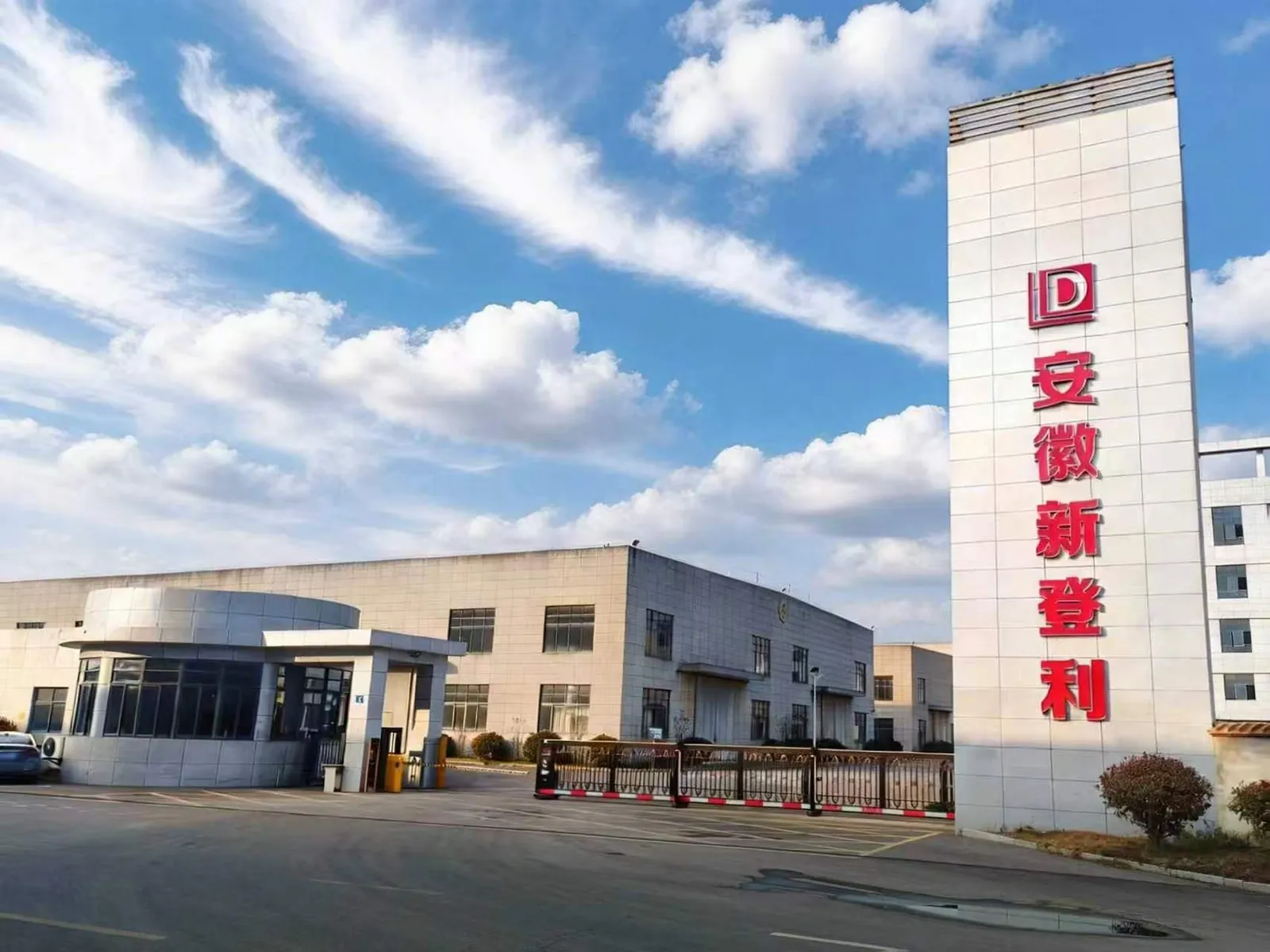
Lu'an, August 12 (CNR, reporter Zhao Jiahui) — Jinzhai County in Anhui Province, a small town known for its revolutionary red heritage, is now nurturing a green industrial revolution: here, an old garment can undergo "chemical rebirth," be transformed into high-purity recycled polyester raw material, and re-enter the supply chains of global brands.
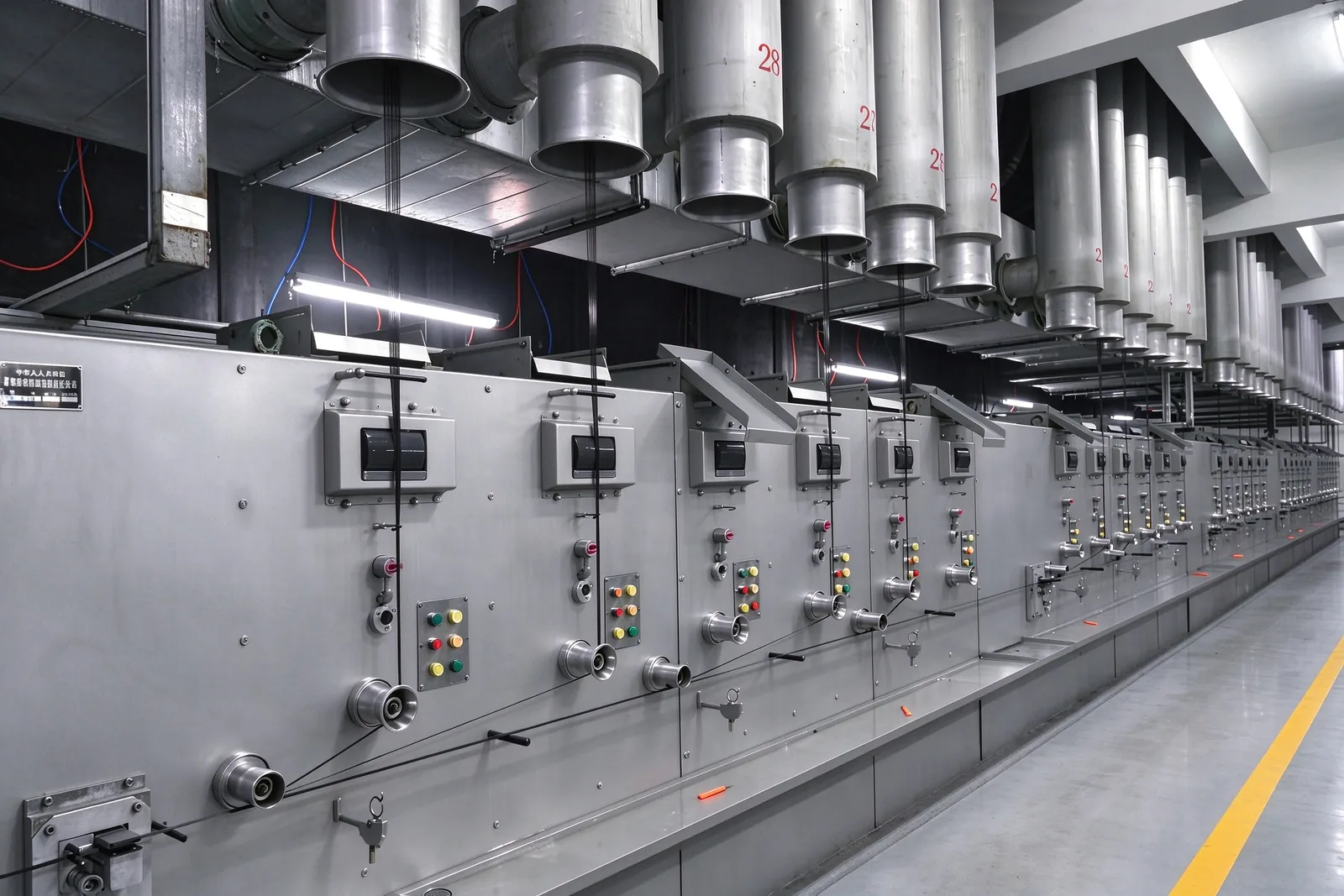
Walking into Syzerly, located in the Jinzhai Modern Industrial Park, fully automated production lines are running at high speed. Beside them, a raw material crusher is shredding textile waste such as old clothes and offcuts, which are then conveyed to an agglomerator heated to 270 degrees Celsius and melted into black-and-white pellets — raw material for making new garments. Textile waste is no longer "rags," but is given new life through core proprietary technologies.
Textile waste is no longer just "old rags." With the right core technology, it starts a new life.
Workers carry out the initial sorting of used garments. (Photo by Zhao Jiahui, CNR)
T2T's Cutting-Edge Technology: “Turning Waste into Clothing”
China is the world's largest producer and consumer of textiles, processing more than half of the world's total textile fibers. The country has a massive stock of textile waste, yet its recycling rate remains severely insufficient, leaving considerable untapped potential for the application of textile waste.
"Our company was founded in 2023, and we have built China's first continuous T2T chemical polyester recycling unit in Jinzhai, with a stable annual capacity of 30,000 tons, filling the gap in China's chemical fiber industry for mass-produced, environmentally friendly recycled products via the T2T chemical process."
— Ye Xiaozhe, General Manager of Syzerly
According to Ye Xiaozhe, T2T stands for Textile to Textile. The technology works by breaking down polyester waste into small chemical molecules, which are then repolymerized into recycled polyester products through steps such as distillation, filtration, and purification. "The products require no secondary processing or addition of extra chemicals, and the production process generates no extra chemical pollution. Their performance is on par with virgin materials, achieving 100% recyclability 'from old clothes to new clothes.'"
Natural-color (light) recycled chips. (Photo by Zhao Jiahui, CNR)
In recent years, Jinzhai County has adhered to the "dual carbon" goals as its guide, focused on new quality productive forces in environmental protection, systematically built a modern environmental protection industrial system, and developed the province's first county-level innovation demonstration zone for new quality productive forces in environmental protection to high standards. "At present, the first phase of our county's 'Syzerly Environmental Protection Equipment Industrial Park,' with total investment of 5.2 billion yuan, has been put into operation, and the second phase is under vigorous construction. Leveraging major projects such as the Jinzhai Pumped-Storage Power Station and the Huadian Fuxin Wind Power project, our county has explored a full-chain demonstration of 'green electricity—green hydrogen—green ammonia,' and our carbon sink trading is at the forefront nationwide," introduced Cao Zuoyi, Deputy Director of the Publicity Department of the CPC Jinzhai County Committee.
Against the backdrop of more than 92 million tons of textile waste generated globally each year, new technological pathways and a new industrial consensus are becoming critical issues that urgently require attention in achieving the "dual carbon" goals.
"T2T chemical decomposition technology for textile waste not only reduces the industry's demand for virgin resources such as petroleum, but also significantly lowers its dependence on virgin resources," said Tian Mingwei, Professor and Doctoral Supervisor at the College of Textiles and Clothing, Qingdao University. This technological pathway is the core of Syzerly's green circular development practice.
"The project's total planned capacity is 100,000 to 110,000 tons per year. Once fully operational, the company will be able to recycle and utilize more than 120,000 tons of textile waste annually and reduce greenhouse gas emissions by more than 480,000 tons, equivalent to the carbon sink effect of 26 million trees," Ye Xiaozhe presented a clear, tangible set of figures: compared with the virgin petroleum-based route, it can reduce carbon emissions and energy consumption by approximately 60%–85%, substantially reducing environmental pollution.
Digital Empowerment Builds a Frontline of Innovation
The development of new quality productive forces is reflected not only in breakthroughs in cutting-edge technologies and companies' "green" practices, but also in their attitude toward digitalization and intelligentization.
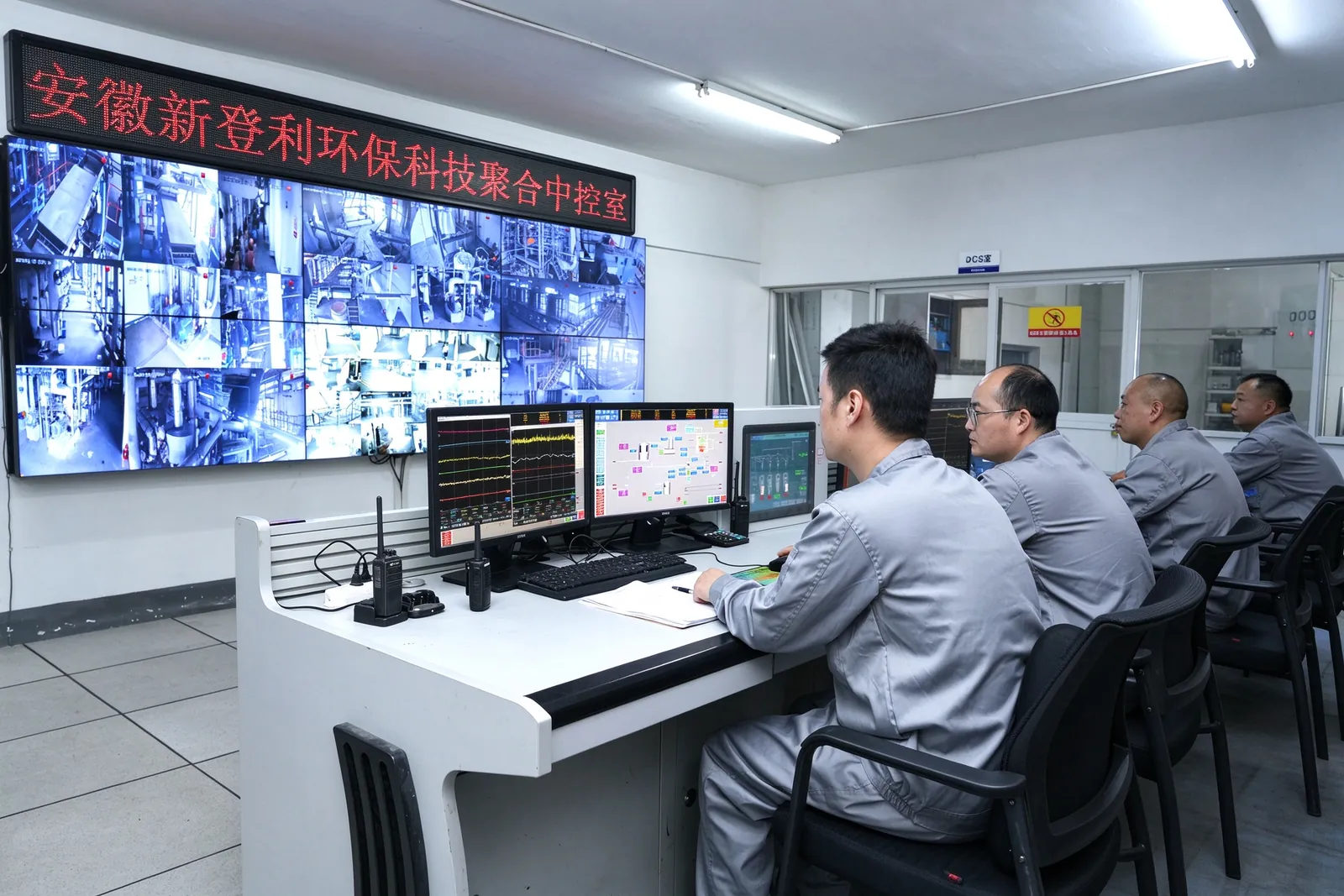
Syzerly's polymerization control room. (Photo provided by Syzerly, via CNR)
In Syzerly's polymerization control room, a monitoring screen displays the real-time operating status of key equipment, and staff sit before their computers closely watching the key equipment. At a time when the wave of digital transformation is sweeping across manufacturing, Syzerly has built a full-process digital workshop since the start of production, and the smart control system it developed enables remote control of equipment "without stepping out of the room." "These five floors contain all core production stages; we need only 7–8 people to monitor and control more than 400 pieces of equipment throughout the entire process," introduced the company's chief engineer. "Each package of material here carries a unique ID code, and when an anomaly occurs, it can be traced to the specific stage within 10 minutes."
In an era where technological barriers have become a core competitiveness, Syzerly has built a solid front line of innovation through a systematic intellectual property layout. At present, the company holds 239 proprietary patented technologies.
Letting textile waste return directly to its fiber essence, with no extra chemical pollution throughout production, and the new fibers produced still able to enter the recycling loop in the future… In today's textile industry, "green" is no longer a label but a threshold for products to enter the global market. Technology investor He Zeyi believes that the deep integration of technology and carbon neutrality has become a structural opportunity in global environmental protection, and that the intersection of "technology + materials + circular economy" is a fulcrum in the next round of industrial restructuring. Mastering recycled material technology can give companies a greater say in international markets.